
May 16, 2026
How North Texas Hailstorms Damage Pool Equipment—and What to Check After One
Hailstorms are a reality of North Texas weather, and they can wreak havoc on your pool equipment. Here's what to check after the storm passes and when to call for repairs.
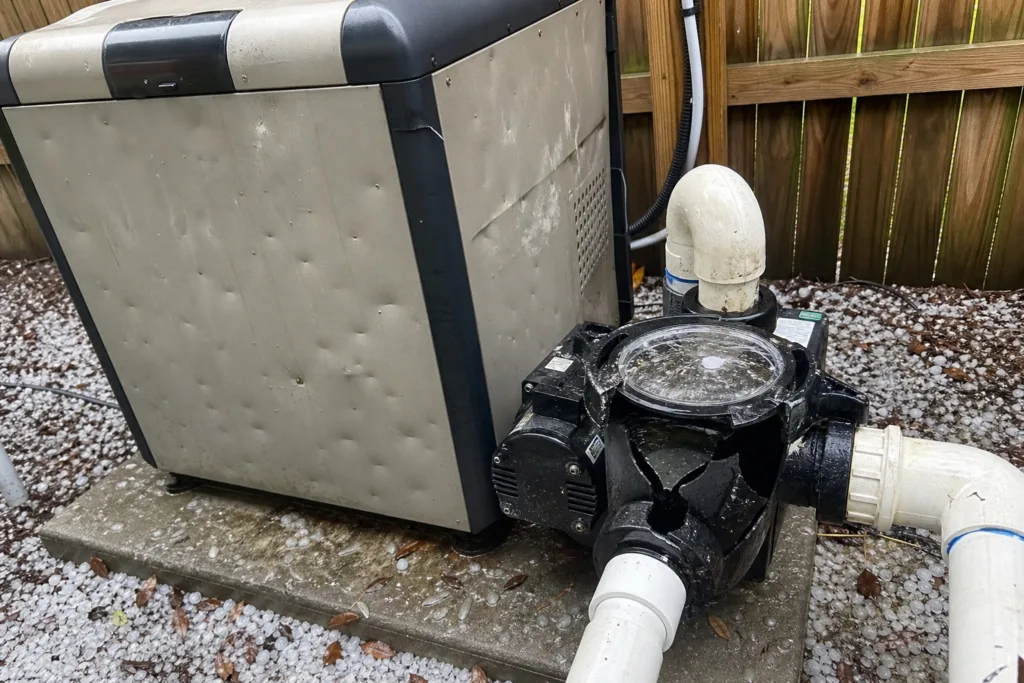
If you've lived in Plano, Allen, Frisco, or anywhere in North Texas for more than a season, you know that hailstorms aren't a question of if—they're a question of when. These sudden, violent weather events can drop golf ball-sized ice chunks from the sky in minutes, leaving a trail of damage across roofs, cars, and yes, your pool equipment. While homeowners are quick to check for roof damage after a hailstorm, many overlook the outdoor equipment that keeps their pool running smoothly. The problem is that hail damage to pool components isn't always obvious immediately, but it can lead to costly failures down the road. Here's what you need to know about protecting your investment and what to inspect after the next big storm rolls through.
Why Pool Equipment Is Vulnerable to Hail Damage
Pool equipment sits exposed to the elements year-round, and most components weren't designed with direct hail impacts in mind. Your pool pump, heater, control panels, and automation systems typically have plastic housings, exposed wiring, and ventilation grills that can crack, dent, or break when struck by falling ice. Unlike indoor equipment, there's no protective barrier between your pool system and the sky. Even a brief hailstorm with moderate-sized stones can compromise seals, crack housings, or damage delicate components inside your equipment. The damage might not stop your system immediately—many pumps and heaters will continue running after a storm—but weakened components fail prematurely, often at the worst possible time during peak swimming season.
Common Equipment Damage From North Texas Hailstorms
Understanding the typical damage patterns helps you know what to look for during your post-storm inspection. Here are the most common problems we see after hailstorms hit the Plano and North Texas area:
- Cracked pump housings and motor covers that expose internal components to moisture and debris
- Damaged heater cabinets with dented panels or broken ventilation louvers that affect airflow
- Broken automation system displays, touchscreens, or control panels that become unresponsive
- Shattered pool light lenses that allow water intrusion into electrical fixtures
- Compromised equipment pad covers and enclosures that no longer protect sensitive electronics
- Dented or punctured filter tanks that can develop leaks or structural weaknesses
- Damaged pressure gauges, valves, and plumbing connections that may develop slow leaks
- Broken chlorinator lids or salt cell housings that prevent proper chemical distribution
What to Check Immediately After a Hailstorm
Safety first: don't inspect your pool equipment during the storm or if there's still lightning in the area. Once it's safe to go outside, conduct a thorough visual inspection before turning anything on. Start by walking around your entire equipment area and looking for obvious damage like cracks, dents, or broken pieces. Check the ground around your equipment for plastic shards or debris that might indicate impact damage. Look closely at pump housings, heater cabinets, and any control panels for cracks or holes. Inspect all exposed PVC plumbing for cracks or separations at joints. Examine your pool automation equipment and any digital displays for cracked screens or visible damage. If you have pool lights, check the lenses for cracks or breaks. Don't forget to look at your pool cleaner if it was left out—hail can damage the cleaner body, wheels, and hoses. If you see any damage at all, don't run the equipment until it's been professionally evaluated. Water and electricity don't mix, and a cracked housing can allow moisture into areas that should stay dry.
Hidden Damage That Shows Up Later
Not all hail damage is immediately visible. Some problems develop over days or weeks following a storm. Hairline cracks in pump housings may not leak right away but can worsen with temperature changes and equipment vibration. Seals around motors and equipment can be compromised without obvious external damage, allowing moisture to gradually infiltrate sensitive areas. Control boards inside heaters or automation systems can suffer shock damage from impacts that don't break the exterior cabinet. We've seen equipment that appeared fine after a storm fail completely weeks later because internal components were jarred loose or circuit boards developed cracks. This is why it's worth having a professional inspection even if nothing looks damaged at first glance. The cost of an inspection is minimal compared to replacing a failed heater or pump motor that could have been repaired if caught early.
Documenting Damage for Insurance Claims
If you discover hail damage to your pool equipment, document everything before making repairs. Take clear, dated photos of all damaged components from multiple angles. Photograph any hail stones you find to show their size. Include wide shots that show the equipment in context and close-ups of specific damage. Save any broken pieces that fall off equipment. Keep records of when the storm occurred—check local weather reports or news archives if you're not certain of the exact date. This documentation is essential if you plan to file an insurance claim. Many homeowners policies cover pool equipment damage from hail, but you'll need evidence. Contact your insurance company to report the damage and ask about coverage before authorizing any repairs. Some policies require you to use specific contractors or get multiple estimates. In our experience working throughout Plano, Richardson, and McKinney, most insurance adjusters appreciate thorough documentation and professional assessments when evaluating pool equipment claims.
When to Call for Professional Pool Equipment Repair
Some situations require immediate professional attention. Call a pool equipment repair service right away if you notice any cracked equipment housings that expose electrical components, visible damage to heaters or automation systems, broken pool light lenses (these create electrical hazards), equipment that won't start or makes unusual sounds after the storm, or any signs of water intrusion into electrical components. Even if damage seems minor, it's worth getting a professional opinion before swimming season heats up. What looks like a small crack can become a major failure when equipment is running at full capacity during July and August. Equipment that limps along with storm damage uses more energy and puts stress on other system components. A proper inspection takes the guesswork out of the equation and gives you peace of mind that your pool is safe to use.
Preventive Measures for Future Storms
While you can't hail-proof your pool equipment completely, you can reduce the risk of damage. Consider installing protective covers or enclosures for pump motors and heaters—these range from simple weather covers to full equipment enclosures that shield components from above. Position new equipment installations under roof overhangs or covered areas when possible. Invest in impact-resistant automation panels if you're upgrading your system. Keep equipment cabinets and doors properly closed and latched so internal components have maximum protection. Some pool owners in hail-prone areas of North Texas install shade structures or pergolas over equipment pads, which provide year-round weather protection while improving energy efficiency. If a severe storm is forecast and you have time, you can place plywood sheets or thick blankets over equipment as temporary protection—just make sure any coverings don't block ventilation if equipment is running.
Need Pool Equipment Inspected or Repaired After Storm Damage?
Don't wait until damaged equipment fails completely. Pool Service Plano provides thorough post-storm inspections and professional equipment repair throughout Plano, Allen, Frisco, Richardson, McKinney, and Dallas. We'll assess the condition of your pool equipment, provide honest recommendations, and help document damage for insurance purposes. Contact us today to schedule an inspection and keep your pool running safely all season long.
We’re Here To Help
Call or send the form with your service details and location.