
May 16, 2026
Summer Heat in Plano: Why Your Chlorine Disappears by Wednesday
If you're testing your pool water on Wednesday and finding little to no chlorine left from Monday's shock, you're not imagining things. Plano's brutal summer heat accelerates chlorine loss faster than most pool owners expect.
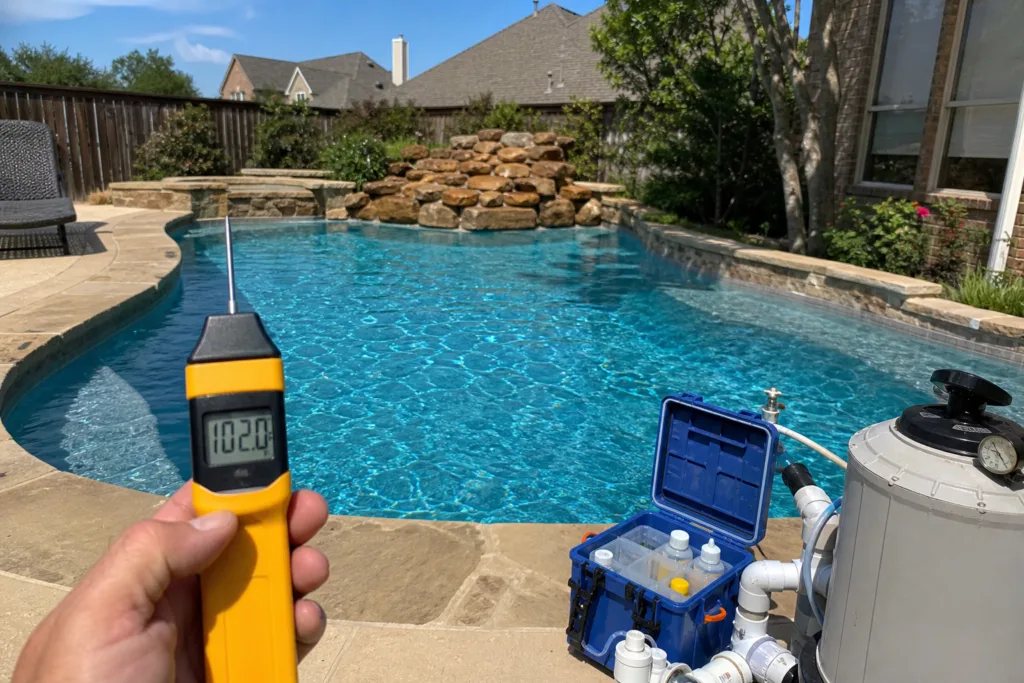
When temperatures in Plano climb above 95 degrees—which happens regularly from June through September—your pool chlorine burns off at an alarming rate. What should last a week barely makes it to midweek. This isn't a product quality issue or a measurement problem. It's simple chemistry combined with North Texas heat, and it affects every pool in the area. Understanding why this happens helps you maintain a clean, safe pool without the constant guesswork.
The Science Behind Rapid Chlorine Loss
Chlorine breaks down when exposed to UV rays and heat. In Plano's summer sun, both factors work overtime. Water temperatures regularly reach 85-90 degrees in residential pools, and direct sunlight pounds the water surface for 10-12 hours daily. Free chlorine molecules break apart under these conditions, converting to chloramines that smell bad but don't sanitize. By Wednesday, that 3 ppm reading from Monday has dropped to 0.5 ppm or less—well below the safe swimming threshold of 1-3 ppm.
- UV radiation destroys up to 90% of free chlorine in direct sunlight within two hours
- Every 10-degree increase in water temperature doubles the rate of chemical reactions
- Higher bather loads in summer introduce contaminants that consume chlorine faster
- Rain and wind blow debris into pools, creating additional chlorine demand
Why Weekend-Only Treatment Doesn't Work in Texas
Many pool owners add chemicals on Saturday or Sunday, expecting them to last until the following weekend. This approach fails in Plano's climate. By Tuesday or Wednesday, chlorine levels drop into the danger zone. Algae spores start colonizing within 24-48 hours of inadequate sanitizer levels. Once algae gains a foothold, you're looking at extensive shocking, brushing, and filtering to clear it up—far more work and expense than prevention requires.
- Algae blooms can develop in 72 hours when chlorine drops below 1 ppm
- Cloudy water indicates existing bacteria growth that requires immediate attention
- Weekend warriors often add too much chlorine to compensate, creating swings in water chemistry
- Inconsistent chemical levels stress pool equipment and surfaces
The Real Cost of Inconsistent Pool Chemistry
Erratic chlorine levels create more problems than just green water. When chlorine drops too low, bacteria and algae multiply. When you overcompensate with shock treatments, you spike pH and calcium hardness, leading to scale buildup on tiles and equipment. This cycle damages pool surfaces, clogs filters faster, and shortens the lifespan of pumps and heaters. In Plano's hard water conditions, chemical imbalances accelerate these problems significantly.
- Scale buildup from pH swings reduces heater efficiency by up to 40%
- Algae staining on plaster requires acid washing or resurfacing to remove
- Clogged filters from algae blooms increase energy costs and reduce circulation
- Unbalanced water voids warranties on equipment and surface finishes
How Weekly Service Solves the Chlorine Problem
Professional weekly pool cleaning addresses the chlorine loss issue through consistent monitoring and adjustment. A technician tests your water mid-week when chlorine levels typically crash, adding precise amounts of sanitizer to maintain the 1-3 ppm range continuously. This approach prevents the boom-and-bust cycle that causes problems. Weekly visits also catch small issues—a clogged skimmer basket, a malfunctioning chlorinator, a small leak—before they become expensive repairs.
- Mid-week testing catches chlorine drops before algae takes hold
- Professional-grade testing measures total chlorine, free chlorine, and combined chlorine separately
- Technicians adjust dosing based on current weather, water temperature, and pool usage
- Regular equipment checks during service visits prevent breakdowns during peak season
What Happens During a Weekly Service Visit
A thorough weekly pool cleaning involves more than dumping in chlorine. Technicians skim the surface, empty skimmer and pump baskets, brush walls and steps, vacuum the floor, and backwash or clean the filter as needed. They test and balance all chemical parameters—chlorine, pH, alkalinity, calcium hardness, and cyanuric acid. This comprehensive approach keeps water clear, equipment running efficiently, and surfaces protected. In Plano's climate, this level of attention isn't luxury maintenance—it's necessary prevention.
- Surface skimming removes organic debris before it sinks and decays
- Brushing prevents algae from attaching to walls where chlorine can't reach effectively
- Filter cleaning maintains proper water flow and filtration efficiency
- Chemical balancing prevents corrosion, scaling, and sanitizer effectiveness problems
Alternative Solutions and Their Limitations
Some pool owners try saltwater systems, mineral sanitizers, or automatic chlorinators to reduce maintenance. These tools help, but they don't eliminate the need for regular testing and adjustment in Plano's extreme conditions. Saltwater generators still produce chlorine that burns off in the sun. Automatic feeders run empty or malfunction. No system replaces the value of experienced eyes checking your pool equipment and water quality weekly throughout the swimming season.
- Saltwater chlorine generators require proper salt levels and cell cleaning to function
- Automatic chlorinators need refilling and can stick in the open or closed position
- Mineral systems reduce but don't eliminate the need for supplemental chlorine
- All automated systems require monitoring to ensure they're working correctly
Keep Your Pool Swim-Ready All Week Long
Stop guessing about your pool chemistry and dealing with mid-week algae blooms. Pool Service Plano provides reliable weekly pool cleaning throughout Plano, Allen, Frisco, Richardson, McKinney, and Dallas. We test, balance, and maintain your pool every week so it's always ready when you are. Contact us today to discuss a weekly service plan that fits your pool's needs.
We’re Here To Help
Call or send the form with your service details and location.